Design unique custom knit socks with our guide! Get quality & perfect fit. Contact us for a free consultation! How to Design Custom Kn...
Design unique custom knit socks with our guide! Get quality & perfect fit. Contact us for a free consultation!
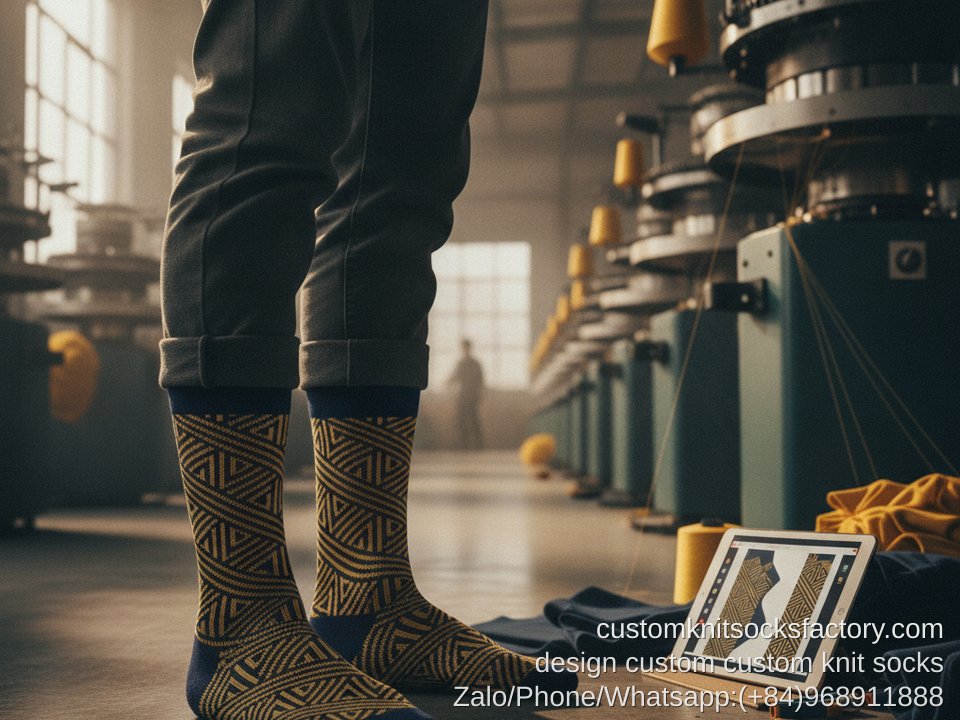
How to Design Custom Knit Socks: From Pattern Concept to Bulk Production
Creating a unique line of custom knit socks starts with a clear vision and a well-executed design process. For brands looking to stand out in a crowded market, custom socks offer a powerful way to express identity, promote a message, or simply provide a unique product offering. This guide will walk you through the essential steps to design custom knit socks, from initial concept to the readiness for bulk production, ensuring your vision translates seamlessly into a high-quality, wearable product.
At Custom Knit Socks Factory, operated by Gold Garment in Ho Chi Minh City, Vietnam, we understand the intricacies of bringing your sock designs to life. Our expertise in manufacturing, coupled with factory-direct pricing and a flexible MOQ of just 100 pieces, makes us an ideal partner for brands of all sizes. We specialize in delivering exceptional quality and value for your custom knit socks design needs.
This comprehensive guide aims to equip you with the knowledge to confidently approach the design phase. Whether you're a seasoned designer or embarking on your first product development journey, understanding the technical aspects alongside the creative ones is crucial for success. We’ll cover everything from conceptualization and pattern creation to preparing your artwork and understanding technical specifications. Our extensive experience in the industry, as detailed in our Gold Garment design support, highlights our commitment to guiding clients through every step.
1. Conceptualization and Inspiration for Your Custom Knit Socks Design
The foundation of any successful custom knit socks design is a strong concept. What message do you want to convey? Who is your target audience? What aesthetic are you aiming for? Consider the overall brand identity, the intended use of the socks (e.g., athletic, casual, promotional), and any specific themes or motifs you wish to incorporate. Gather inspiration from mood boards, existing sock trends, art, nature, or even abstract ideas.
Think about the narrative you want your socks to tell. Are they bold and expressive, understated and elegant, or playful and whimsical? Understanding your brand's personality will guide your design choices, from color palettes to the complexity of patterns. This initial brainstorming phase is critical for setting the direction of your custom knit socks design.
2. Translating Ideas into Visuals: Sketching and Digital Mockups
Once your concept is solidified, it's time to bring it to life visually. Start with rough sketches to explore different ideas and layouts. Don't worry about perfection at this stage; focus on capturing the essence of your design. Consider how the design will wrap around the foot and leg, and how different elements will interact.
After sketching, move to digital tools. Graphic design software like Adobe Illustrator or Photoshop is invaluable for creating detailed mockups. These digital representations allow you to experiment with colors, patterns, and placements with precision. You can create realistic mockups that show how your custom knit socks will look when worn, helping you visualize the final product and make necessary adjustments before committing to production.
3. Understanding Sock Anatomy and Design Constraints
Effective custom knit socks design requires an understanding of how socks are constructed. Key areas to consider include the cuff, leg, heel, and toe. Each section has specific properties that influence how your design will appear. For instance, the ribbed cuff offers a different canvas than the smoother leg portion.
Be mindful of the knitting process. Intricate details or extremely fine lines might be challenging to replicate perfectly. It's beneficial to have a basic understanding of knitting techniques, such as jacquard or intarsia, which allow for complex patterns. Familiarizing yourself with different sock types can also inform your design decisions regarding length and functionality.
4. Creating Your Sock Artwork File
The sock artwork file is the blueprint for your custom knit socks. It needs to be precise and formatted correctly for manufacturing. Typically, this involves creating a flat, unfolded representation of the sock design. Your designer will need to account for seams and the way the pattern stretches and distorts when knitted and worn.
Vector-based files (like .AI or .EPS) are generally preferred for their scalability and crispness. Ensure all colors are specified using a Pantone Matching System (PMS) for accurate color reproduction. High-resolution raster files (.PSD or .TIFF) can also be used, but vector is usually ideal for intricate patterns. If you're unsure about creating a suitable sock artwork file, our team can provide guidance.
5. Developing the Custom Knit Socks Tech Spec
The custom knit socks tech spec, also known as a tech pack, is a critical document that communicates all the necessary details to the manufacturer. It’s more than just the artwork; it includes information about materials, sizing, yarn colors, construction methods, and any special finishing requirements. A comprehensive tech spec ensures that your vision is understood and executed precisely.
Key elements of a tech spec typically include:
- Product Description: Type of sock (crew, ankle, etc.), intended use.
- Sizing: Specific measurements for different sizes (e.g., S, M, L).
- Materials: Fiber content (e.g., cotton, polyester, spandex) and yarn weight. Refer to our custom knit socks Materials Guide for options.
- Color Palette: Specific PMS color codes for all yarns and design elements.
- Artwork: The final, approved sock artwork file.
- Construction Details: Knitting gauge, stitch types, heel and toe reinforcement, cuff construction.
- Labeling and Packaging: Placement of brand labels, hang tags, and packaging instructions.
A well-documented tech spec minimizes errors and ensures consistency across your production run. It’s a vital tool for effective communication in the manufacturing process, as explained in our guide on how to write a tech pack for garments.
6. Material Selection: The Heart of Your Custom Socks
The choice of materials significantly impacts the comfort, durability, and aesthetic of your custom knit socks. Common options include cotton for softness and breathability, polyester for durability and color vibrancy, bamboo for its eco-friendliness and moisture-wicking properties, and merino wool for warmth and odor resistance. Blends are often used to combine the best attributes of different fibers.
Consider the intended use of the socks when selecting materials. Athletic socks might benefit from moisture-wicking synthetics and targeted cushioning, while casual socks might prioritize softness and natural fibers. Discussing material options with your manufacturer can help you find the perfect balance for your budget and desired outcome.
7. Color Matching and Yarn Selection
Accurate color matching is crucial for bringing your design to life. Using the Pantone Matching System (PMS) ensures that the colors in your design are translated accurately into yarn dyes. Your manufacturer will use these PMS codes to select the correct yarns for knitting.
It's important to remember that colors can appear slightly different on screen than they do in yarn form, and knitting can subtly alter color perception. Requesting physical yarn swatches in your specified PMS colors before bulk production begins is a wise step to confirm accuracy and avoid costly mistakes.
8. Prototyping and Sampling
Before committing to a large production run, it's essential to create prototypes or samples of your custom knit socks. This allows you to physically inspect the quality, fit, and appearance of your design. You can test the comfort, check for any manufacturing defects, and ensure that the colors and patterns match your expectations.
This sampling stage is also an opportunity to refine the design or tech spec based on the initial sample. Small adjustments can often make a big difference in the final product. This iterative process is a hallmark of successful product development, and it’s a key part of our approach at Custom Knit Socks Factory, as demonstrated by Gold Garment custom sock manufacturing.
9. Preparing for Bulk Production
Once you have approved the samples and finalized your tech spec, you are ready for bulk production. At Custom Knit Socks Factory, we work with a minimum order quantity (MOQ) of just 100 pieces per style, offering competitive factory-direct pricing. Our experienced team in Ho Chi Minh City, Vietnam, is equipped to handle orders of various sizes for clients worldwide.
Ensuring your artwork and tech spec are finalized and signed off is critical before production commences. Clear communication with your manufacturing partner about timelines and expected delivery dates is also important. Brands also partner with Vietnam sweatshirt manufacturer for complementary apparel, showcasing the diverse manufacturing capabilities available.
Frequently Asked Questions
Q: What is the minimum order quantity (MOQ) for custom knit socks?
A: At Custom Knit Socks Factory, we offer a flexible MOQ of just 100 pieces per style. This allows both small and large brands to produce custom knit socks without significant upfront investment.
Q: Can I provide my own artwork for custom knit socks?
A: Absolutely. We encourage clients to provide their own artwork. We recommend vector formats (.AI, .EPS) for best results, and our team can guide you on preparing your sock artwork file to meet manufacturing requirements.
Q: How long does the design and production process take?
A: The timeline can vary depending on the complexity of the design and the production volume. Typically, the design and sampling phase can take 2-4 weeks, followed by 4-8 weeks for bulk production. Factors like material availability and shipping times also play a role. For more details on timelines, you might find our guide on custom knit socks: Complete OEM & Private Label Buyer's Guide informative.
Q: What are the benefits of factory-direct pricing?
A: Factory-direct pricing means you are cutting out intermediaries, leading to more competitive costs for your custom knit socks. This allows you to maximize your profit margins or offer more affordable pricing to your customers.
By following these steps, you can confidently navigate the process of designing custom knit socks, ensuring your vision is realized with quality and precision.
Partner with Custom Knit Socks Factory to bring your unique sock designs from concept to completion with exceptional quality and factory-direct pricing.
📩 Request a Free Quote — Response Within 5 Minutes
🌎 Website: customknitsocksfactory.com
Factory-direct pricing · MOQ from 100 pcs/style · Sample development · Worldwide shipping


