Inspect custom knit socks quality for durable, vibrant designs. Request your free sample today! Quality Control in Custom Knit Socks Manuf...
Inspect custom knit socks quality for durable, vibrant designs. Request your free sample today!
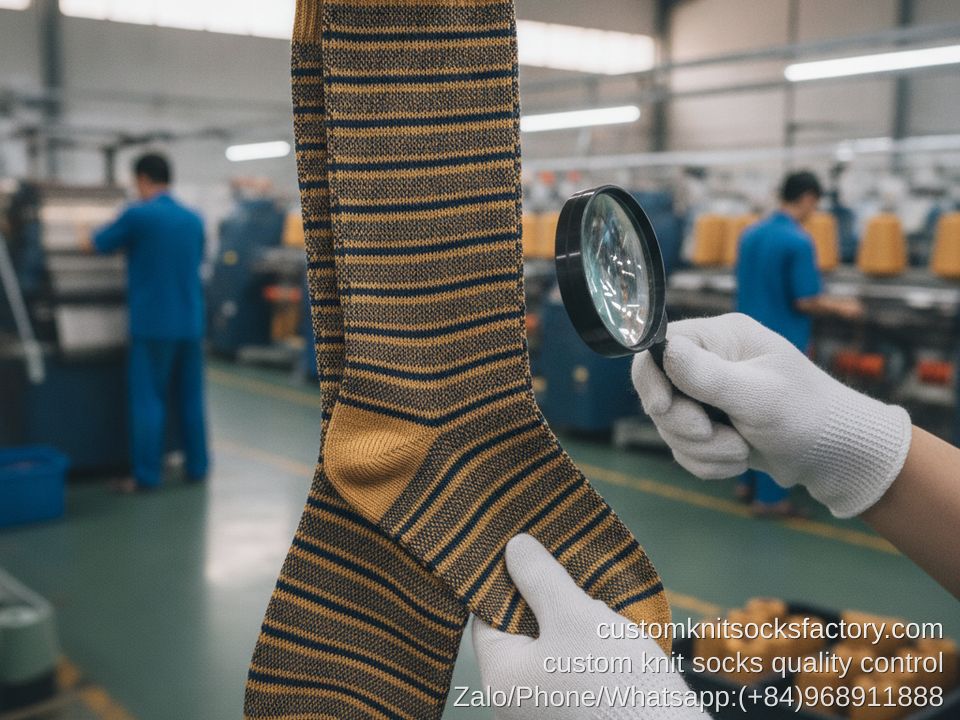
Quality Control in Custom Knit Socks Manufacturing: What Buyers Should Inspect
For brands and businesses seeking to source high-quality custom knit socks, understanding and implementing robust quality control measures is paramount. As a leading custom knit socks manufacturer in Vietnam, operated by Gold Garment, we recognize that consistent quality is the bedrock of customer satisfaction and brand reputation. This guide details the critical areas buyers should inspect to ensure their custom knit socks meet the highest standards, from yarn selection to final packaging.
Effective custom knit socks quality control begins long before the first sock is knitted. It involves a collaborative approach between the buyer and the manufacturer, establishing clear expectations and inspection protocols. Our commitment at Custom Knit Socks Factory, based in Ho Chi Minh City, Vietnam, is to provide transparent and reliable production, ensuring your vision is realized with precision and quality.
Understanding Quality Standards: The Foundation of Inspection
Before any production begins, it's essential to define the quality standards for your custom knit socks. This includes specifying the acceptable AQL inspection socks levels, which dictate the maximum number of defects allowed in a batch before it fails inspection. These standards, often referred to as Vietnam factory AQL standards, are crucial for consistent production and are a key part of our quality assurance at Gold Garment. Familiarizing yourself with these benchmarks is the first step in ensuring your production runs smoothly.
Beyond general defect rates, specific custom knit socks defect standards need to be established based on the sock's intended use and target market. For instance, athletic socks might have stricter requirements for seam integrity and material durability compared to casual wear. Understanding the nuances of different sock types, as explained in our Sock Types Guide: Crew, Ankle, Knee-High, Compression & Athletic Explained, can help tailor these standards effectively.
Key Inspection Points During Manufacturing
The manufacturing process for custom knit socks is intricate, and quality checks must be integrated at various stages. Focusing on these key inspection points will help identify and rectify issues early, preventing costly rework or batch rejection.
1. Material and Yarn Inspection
The quality of your custom knit socks starts with the raw materials. Buyers should inspect the yarn for:
- Color Consistency: Ensure the yarn dye lots are consistent across the entire order. Variations can lead to noticeable color differences in the finished socks.
- Fiber Integrity: Check for any signs of damage, such as fraying, knots, or impurities in the yarn. The chosen materials, whether cotton, bamboo, merino wool, or synthetic blends, must meet the specifications outlined in your order. Our Custom Knit Socks Materials Guide provides more detail on selecting the right options.
- Yarn Strength and Purity: For performance socks, the yarn's tensile strength and purity are vital to prevent premature wear and tear.
2. Knitting and Construction Checks
The knitting process itself is where the sock takes its form. Buyers should pay close attention to:
- Gauge and Stitch Density: Verify that the knitting gauge and stitch density match the approved sample and design specifications. This directly impacts the sock's fit, feel, and durability.
- Seam Quality: Examine the toe seams and any other construction seams. They should be smooth, flat, and without any loose threads or holes. A poorly constructed seam can cause discomfort and lead to unraveling.
- Pattern and Design Accuracy: For intricate designs or jacquard patterns, ensure they are accurately replicated from the approved artwork. Any misalignments or color bleeds are critical defects.
- Sock Dimension and Fit: Check the overall dimensions of the knitted sock, including length, width, and cuff height. This is crucial for ensuring a consistent fit across all sizes.
3. Dyeing and Finishing Processes
After knitting, socks undergo dyeing and finishing. These stages are critical for both aesthetics and performance:
- Color Fastness: The dyed colors should be vibrant and resistant to fading. Perform a rub test to check for color transfer onto other materials or skin.
- Dye Uniformity: Inspect for any streaks, spots, or uneven dyeing. The color should be consistent throughout the sock and across the entire production batch.
- Shrinkage Control: Ensure the socks have undergone appropriate finishing processes to control shrinkage after washing, as per the agreed specifications.
- Fabric Hand and Feel: The finished socks should have the desired softness and texture. Any stiffness or rough patches can indicate issues in the finishing process.
4. Printing and Embroidery (If Applicable)
If your custom knit socks feature printed logos or embroidery, these elements require specific inspection: Vietnam factory AQL standards.
- Print Clarity and Adhesion: Prints should be sharp, well-defined, and firmly adhered to the fabric. Check for peeling, cracking, or smudging.
- Embroidery Quality: For embroidered designs, ensure the stitches are neat, consistent, and free from loose threads or skipped stitches. The embroidery should accurately reflect the approved design and size. Brands also partner with 3D embroidered caps manufacturer for complementary branded merchandise.
- Placement Accuracy: Verify that prints and embroidery are placed correctly on the sock according to the design specifications.
5. Final Inspection and Packaging
The final inspection is the last opportunity to catch any remaining defects before shipment. This stage typically includes:
- Overall Appearance: A thorough visual check for any cosmetic defects, such as stains, snags, or holes.
- Sizing and Labeling: Confirm that each sock is correctly sized and that all required labels (brand, size, care instructions) are present, legible, and correctly attached.
- Pairing and Folding: Ensure socks are correctly paired and folded or rolled as per the buyer's instructions.
- Packaging Integrity: Inspect the final packaging, including polybags, boxes, or hangtags, for damage and accuracy.
Implementing a Robust Hosiery Quality Check System
To ensure consistent quality, a structured hosiery quality check system is essential. This involves defining clear inspection procedures, training inspectors, and maintaining detailed records. At Custom Knit Socks Factory, we implement multi-stage inspections, from raw material checks to final product audits. Our experience as a reliable Vietnam sock OEM ODM manufacturer allows us to offer comprehensive quality assurance for every order.
Buyers should consider conducting their own independent inspections, especially for larger orders. This can involve hiring a third-party inspection service or having their own quality control team visit the factory. Understanding the custom knit socks manufacturing process step-by-step, as detailed in our guide, can help buyers identify critical control points for their own inspections. Whether you opt for OEM or private label, as discussed in our OEM vs Private Label custom knit socks: Which Manufacturing Model Is Right for You? guide, quality control remains a shared responsibility.
Our factory-direct pricing and low MOQ of 100 pcs per style, combined with over 10 years of experience serving clients in the USA, Europe, Australia, and Southeast Asia, make us an ideal partner for your custom knit socks needs. We are committed to upholding the highest standards of quality and transparency throughout the manufacturing process.
Frequently Asked Questions
Q: What is the most common defect in custom knit socks?
A: One of the most common defects is seam integrity issues, particularly in the toe seam. This can include loose threads, holes, or seams that are too bulky and uncomfortable. Another frequent issue is color inconsistency, either within a single sock or across a batch, often due to variations in dye lots.
Q: How can I ensure consistent sizing in my custom knit socks?
A: Consistent sizing is achieved through precise knitting machine settings and strict adherence to dimensional specifications. Buyers should provide detailed measurement charts for each size and ensure the factory has calibrated equipment. Post-knitting, checking sock dimensions before and after finishing processes is crucial. Understanding the Minimum Order Quantity for custom knit socks: A Buyer's Complete Guide can also help ensure that your production run is large enough for optimal machine calibration.
Q: What is AQL and why is it important for socks?
A: AQL stands for Acceptable Quality Limit. It's a standard used in quality control to define the acceptable number of defects in a batch of products. For custom knit socks, AQL is important because it provides an objective benchmark for quality. It helps buyers and manufacturers agree on what level of defects is acceptable, ensuring that the overall quality of the shipment meets expectations without being overly restrictive or costly.
Q: Can I request specific testing for my custom knit socks?
A: Absolutely. Buyers can request various tests, such as color fastness tests, shrinkage tests, tensile strength tests for yarn, and durability tests for the finished socks. These tests help verify that the socks meet performance and quality requirements, especially for specialized applications like athletic or work socks. Our comprehensive approach to manufacturing ensures we can accommodate such specific testing requirements.
Partner with Custom Knit Socks Factory for your next production run and experience the difference that meticulous quality control makes.
📩 Request a Free Quote — Response Within 5 Minutes
🌎 Website: customknitsocksfactory.com
Factory-direct pricing · MOQ from 100 pcs/style · Sample development · Worldwide shipping


